


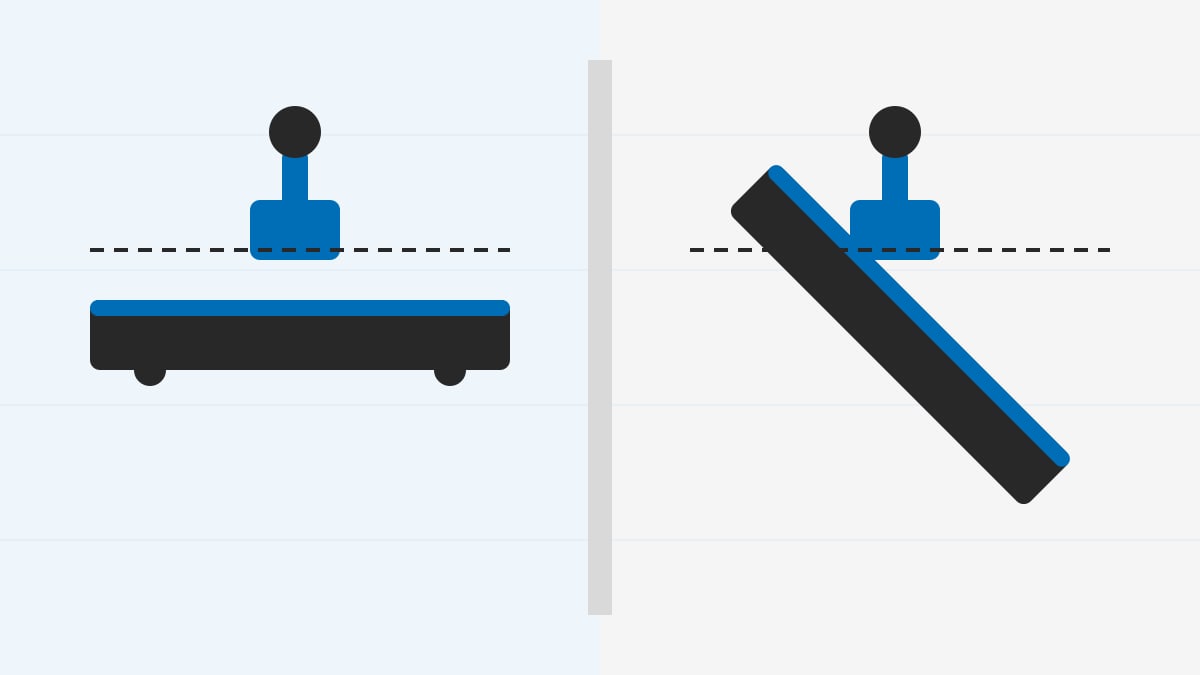
Both flat-bed and slant-bed lathes remove metal by rotating the workpiece against a single-point tool. The difference is the angle of the bed, and that one geometric decision cascades into chip control, rigidity, footprint, speed and — most importantly — which jobs each machine is good at.
Here is how to tell which one your shop actually needs.
The layouts
Flat-bed. The bed sits horizontally, parallel to the spindle axis. This is the traditional layout, and it is what almost everyone pictures when they think of a lathe. Long travel is straightforward, manual control is direct, and the machine is easy to see into and easy to work on.
Slant-bed. The bed is inclined, usually at 45°. Gravity now works with you rather than against you: chips fall away from the cutting zone instead of piling up on the ways. The structure is more symmetric, which makes it stiffer for the same mass.
Chip control is the real difference
On a flat-bed machine, chips land on the bed and around the tool. Some of them get dragged back through the cut, which is how you get a spoiled surface finish and a broken insert. The operator ends up clearing chips by hand.
On a slant-bed machine, chips slide down and out. On a machine running unattended — or on a bar-fed machine running continuously — that difference is not a convenience, it is the difference between a process that works and one that does not.
Side-by-side
| Consideration | Flat-bed | Slant-bed |
|---|---|---|
| Bed layout | Horizontal, parallel to spindle axis | Inclined, integral cast structure |
| Best for | Long shafts, rolls, cylinders, repair | Short, precise, high-volume parts |
| Turning length | Up to 3,000 mm | Typically up to 700 mm |
| Spindle speed | Moderate, high torque at low rpm | Higher, better for small diameters |
| Chip evacuation | Conveyor needed, chips sit on the bed | Gravity-assisted, naturally clear |
| Footprint | Longer machine for the same capacity | Compact, less floor area |
| Manual operation | Direct and comfortable | Less convenient to see into |
| Typical cost | Lower | Higher |
When a flat-bed lathe is the right answer
Flat-bed machines win on length, on torque at low speed, and on value.
Choose flat-bed when:
- Your work is long relative to its diameter — shafts, rolls, spindles, lead screws
- You do repair and one-off work where the operator needs to see and feel the cut
- You need high torque at low spindle speed for large-diameter or hard material
- You need long travel between centres — up to 3,000 mm on our C6163
- Budget matters and the parts do not demand high speed
This is where a horizontal universal manual lathe — the machine our C6132 through C6180 range is built around — is unbeatable. For general machinery parts, maintenance and job-shop turning, it remains the fastest and most economical route.
When a slant-bed lathe is the right answer
Slant-bed machines win on speed, chip control, and repeatability on small parts.
Choose slant-bed when:
- Your parts are short and small in diameter — typically under 700 mm long
- You need higher spindle speeds for fine surface finishes
- You are running production volumes where cycle time matters
- You want unattended or lightly attended running and chips must clear themselves
- Floor space is tight and a compact machine matters
The stiffer, more symmetric structure also holds geometry better under thermal load, which shows up as more consistent diameters across a batch.
The honest answer for most shops
Most general machine shops need a flat-bed lathe first, because most of their work is repair, one-off and long-part turning. A slant-bed machine is added later, when a specific family of small parts reaches a volume where cycle time and chip control start to pay for themselves.
Buying a slant-bed machine to do long shaft work is a mistake. Buying a flat-bed machine to run small parts at high volume is a slower, messier mistake.
If you build machines rather than parts
There is a third option that sits between the two. If you are a machine builder or OEM, you may not want a complete machine at all — you want the bed and frame, machined and aligned to your drawing, so your own spindle, guideway and control package drops straight on.
We supply both flat-bed and slant-bed frames and bed structures on that basis: cast, stress-relieved, machined and geometrically verified before dispatch.
Which one do you need?
Tell us the parts you turn — largest diameter, longest length, material and batch size — and we will tell you which layout suits the work, and which of our sizes fits it. If you would rather build your own, send a drawing and we will quote the frame and bed. Get in touch with our team and we will come back within one business day.